Ocean City Boardwalk Hotel Proposal Remains Under Negotiation
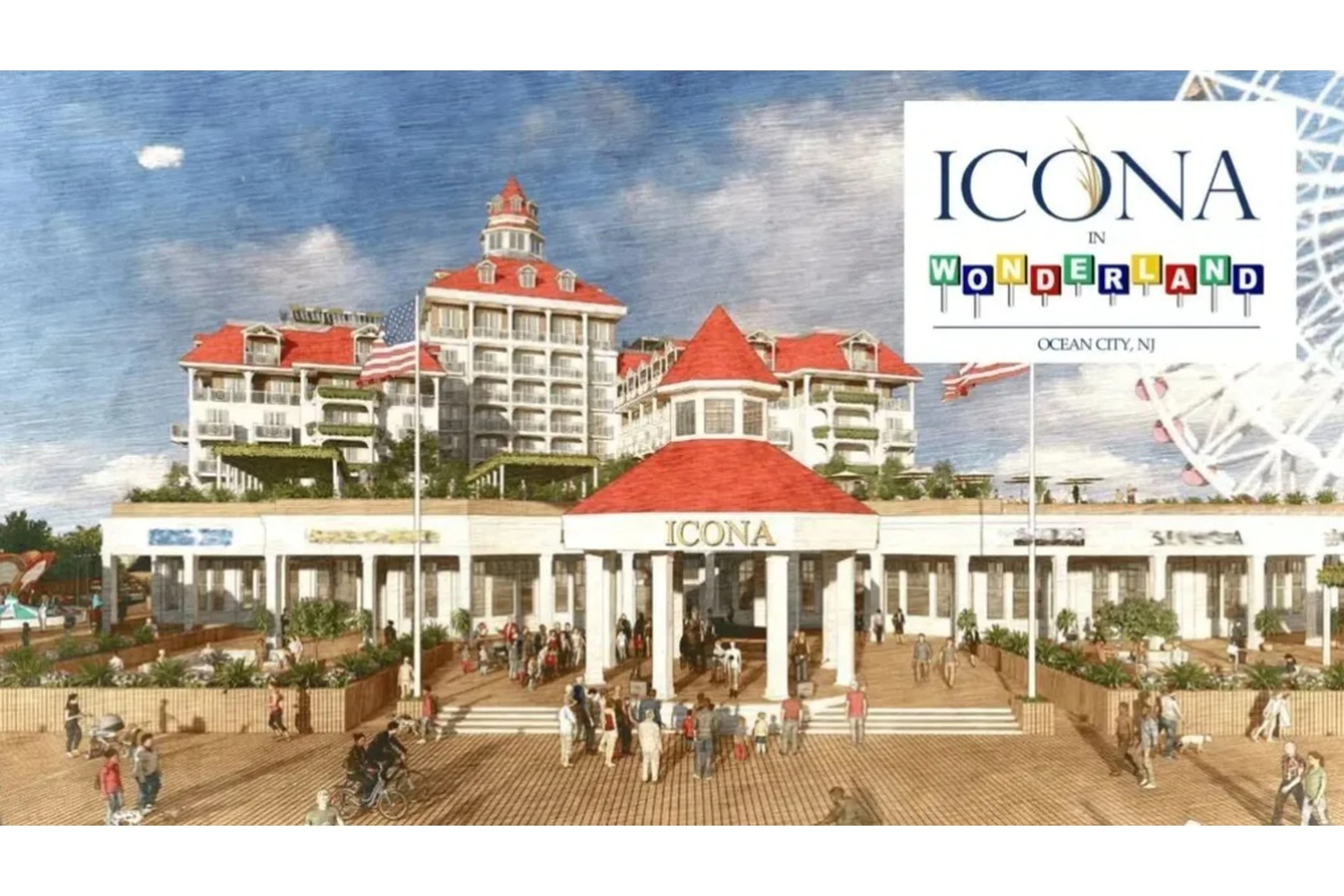
The future of the former Wonderland Pier property at 6th Street remains unsettled. Ocean City officials and developer Eustace Mita of Icona Resorts are negotiating a revised redevelopment agreement, with public review expected before an official legislative vote.
For homeowners, business owners, and families who return to Ocean City each summer, the discussion involves more than replacing a closed amusement park. It raises questions about the Boardwalk’s building scale, its lodging inventory, and the kind of activity that should occupy a prominent waterfront property.
The research describes a smaller hotel concept than the developer’s earlier proposal. However, a revised concept and an approved redevelopment agreement are different stages. The information provided does not establish that the latest hotel design has received final approval.
What Is Being Discussed at the Wonderland Site
Wonderland Pier closed permanently in 2024, leaving a major Boardwalk parcel without its former amusement operation. The current discussions concern redevelopment of that property near 6th Street.
According to the supplied OCNJ Daily reporting, the latest concept is a seven-story hotel with fewer rooms than the earlier 252-room proposal. The earlier project was described as a $150 million to $200 million concept.
Those figures help explain the scale of the discussion, but they should not be presented as a final construction budget or an approved room count for the revised project. The packet does not provide the latest total number of rooms.
Negotiations paused during the first week of October while Mita traveled abroad. Officials expected discussions to resume after his return. That interruption was described as a pause in negotiations, rather than a decision to approve or abandon the redevelopment.
Public Review Is Still Part of the Process
City Council President Terry Crowley Jr. and other council members have indicated that a tentative agreement would be presented for public scrutiny and community input before an official vote.
That distinction matters for residents following the issue from outside Ocean City. Private negotiations can produce proposed terms, but the public still needs an opportunity to examine what those terms would authorize.
The next meaningful information would be the agreement itself, along with the corresponding public review and legislative action. Until that material is available, descriptions of the project should retain words such as “proposed,” “revised,” and “under negotiation.”
For property owners near the former Wonderland site, the useful questions concern the actual proposal:
What building height and room count would the agreement permit?
What obligations would the developer and city assume?
What public review would occur before a vote?
Which elements would remain subject to additional approvals?
The packet does not resolve those questions. They are items to evaluate when the negotiated documents become public.
Why Hotel Supporters and Opponents Differ
The debate reflects different priorities for the same Boardwalk location.
Some business interests, including members of the Boardwalk Merchants Association, support additional upscale hotel accommodations. The supplied reporting places Ocean City’s active lodging inventory at approximately 1,000 rooms. Supporters view a hotel as a way to address that limited inventory.
Opponents, including Ocean City 2050, have raised concerns about a taller commercial hospitality building and its compatibility with the Boardwalk’s established scale and family-oriented character.
Neither position establishes what the final agreement will contain. The disagreement does explain why details such as height, room count, and permitted use deserve careful public examination.
The lodging argument also should not be converted into an unsupported economic forecast. The packet does not supply a study quantifying future visitor spending, business revenue, traffic, or municipal tax receipts from the revised hotel.
The Ferris Wheel Has a Separate Uncertain Future
The former amusement park’s Ferris wheel remains another issue attached to the property.
The supplied reporting describes the wheel as 140 feet tall and places potential rehabilitation costs at approximately $2 million to $3 million. City Council previously declined the developer’s proposal to transfer it to municipal ownership.
That decision concerns the city’s willingness to take responsibility for the structure and its associated rehabilitation expense. It does not, by itself, establish the final redevelopment plan for the entire parcel.
The packet also identifies deterioration of the underlying pier decking as a concern. It suggests that dismantling has become more likely, but does not provide a confirmed removal schedule.
Residents should therefore separate three questions: the wheel’s physical condition, its ownership and maintenance responsibility, and the proposed future use of the surrounding property.
What Ocean City Property Owners Can Take From This
The Ocean City Boardwalk hotel proposal is a development story with legitimate real estate relevance. A change in the use and scale of a prominent neighboring parcel is something buyers and sellers may want to understand.
However, the research does not establish a measurable effect on nearby home prices, rental performance, or investment returns. Those outcomes should not be assumed from the existence of a hotel proposal.
A practical review starts with the property’s location relative to the site and the proposal’s documented terms. Buyers evaluating a nearby home should distinguish present conditions from possible future development. Sellers should make the same distinction when discussing the neighborhood.
The most useful next step is to follow the public agreement and approval record rather than treating preliminary descriptions as settled construction plans.
Questions Residents Are Asking
Is the revised hotel approved?
The supplied research describes ongoing negotiations and anticipated public review. It does not establish final approval of the latest design.
How many rooms would it contain?
The revised concept reportedly has fewer rooms than the earlier 252-room proposal. A new exact room count is not provided.
Will the Ferris wheel remain?
Its future is uncertain. The packet identifies rehabilitation costs and decking concerns, but does not establish a final preservation or removal schedule.
For anyone following the former Wonderland Pier property, the next public documents should provide a firmer basis for evaluating the project than preliminary descriptions alone.
Sources: OCNJ Daily