Ocean City Beach Replenishment Reaches Final Phase
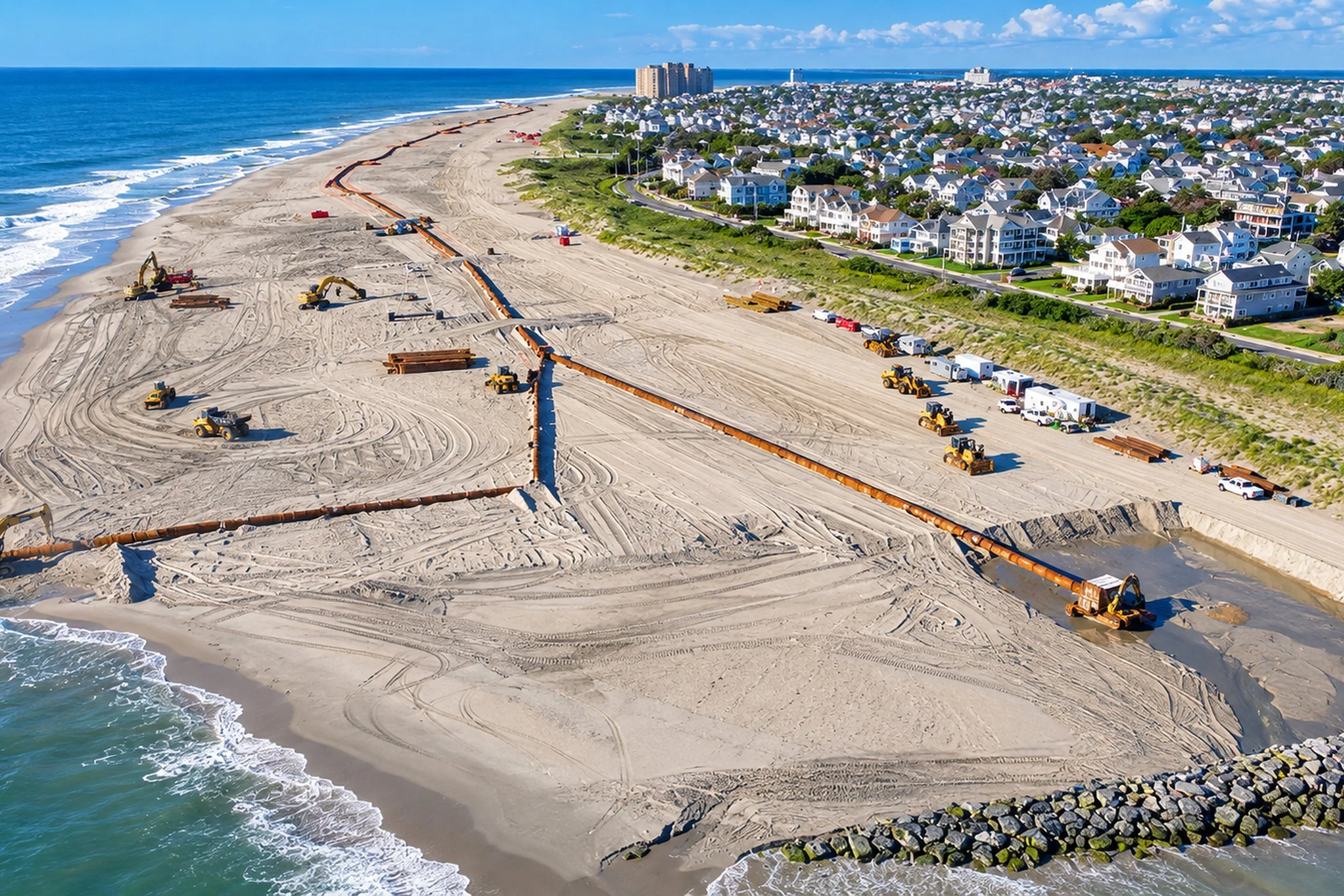
Brief Summary: Ocean City’s north-end beach replenishment project is moving through its final phase after approximately 1.6 million cubic yards of sand were placed between Seaspray Beach and 12th Street under a $19.5 million federal contract.
Ocean City’s North-End Beach Project Nears Completion
Ocean City’s latest beach replenishment project has reached an important milestone, with sand placement completed along a large stretch of the city’s north-end oceanfront.
The work extends from the terminal rock groin near Seaspray Beach south to 12th Street. Approximately 1.6 million cubic yards of offshore sand were placed as part of the project, which is being completed through Ocean City’s long-running partnership with the U.S. Army Corps of Engineers.
For homeowners, visitors, and anyone who spends time along Ocean City’s beaches, the project represents another major investment in maintaining the shoreline that defines much of the community.
A $19.5 Million Federal Shoreline Project
Great Lakes Dredge & Dock Company performed the work under a federally awarded contract valued at approximately $19.5 million.
The project involved hydraulic pumping operations that ran continuously as crews rebuilt eroded beach and dune areas.
This is not Ocean City’s first experience with large-scale replenishment. According to the research provided, the latest work represents the 11th replenishment cycle completed under the city’s approximately 50-year federal partnership agreement established in the early 1990s.
That history is significant because beach replenishment in Ocean City is not a one-time construction project. It is part of an ongoing shoreline-management strategy.
What Happens After the Sand Is Placed?
Completing sand placement does not mean every piece of equipment disappears immediately.
The final phase includes removing pipelines, earthmoving equipment, and other construction infrastructure used during the project.
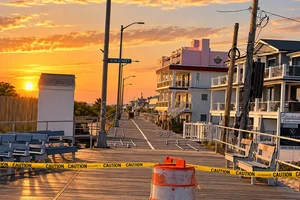
Staging and demobilization have affected areas around the Morningside Road dune crossover and portions of Beach Road.
During active construction, crews also maintained approximately 1,000-foot work zones while attempting to preserve beach access corridors in areas including Atlantic Beach and North Street.
As equipment is removed, these temporary impacts should progressively disappear.
Why Ocean City Replenishes Its Beaches
Beach replenishment serves purposes beyond creating additional recreational beach space.
The wider beach and restored dune system provide a buffer between the Atlantic Ocean and Ocean City’s homes, streets, utilities, and public infrastructure.
During coastal storms, dunes and beaches absorb wave energy and provide additional protection against storm surge.
That function is especially important on a barrier island where residential neighborhoods, commercial areas, and public infrastructure sit close to the ocean.
The project therefore combines beach maintenance with long-term coastal protection.
What This Means for Ocean City Property Owners
For Ocean City homeowners, particularly those near the oceanfront, beach replenishment is part of the broader infrastructure system supporting property throughout the barrier island.
A property’s location relative to dunes, beaches, bulkheads, drainage infrastructure, and flood zones can all matter when evaluating real estate in Ocean City.
That does not mean a replenishment project determines an individual property's value. It does mean shoreline protection remains an important part of the larger conversation surrounding ownership and investment on the island.
Ocean City’s repeated participation in federal replenishment projects also illustrates the amount of infrastructure required to maintain a developed barrier-island community.
The Bigger Picture
Ocean City continues to balance recreation, tourism, residential property ownership, and coastal protection.
The latest project provides a useful example of how those priorities overlap.
Approximately 1.6 million cubic yards of sand, a $19.5 million federal contract, and a project area stretching from Seaspray Beach to 12th Street make this one of the more visible infrastructure projects affecting Ocean City’s north end.
As demobilization concludes, attention will shift from active construction back to the long-term purpose of the project: maintaining a stronger shoreline in front of one of New Jersey’s most heavily developed barrier-island communities.
If you own property in Ocean City and have questions about how location, flood considerations, or nearby infrastructure factor into the real estate market, I’m happy to help. You can call me directly, send a quick message, or visit my contact page.
Sources: City of Ocean City; U.S. Army Corps of Engineers