Ocean City Beach Replenishment 2026: What the $19.5M Project Means for Local Property Owners
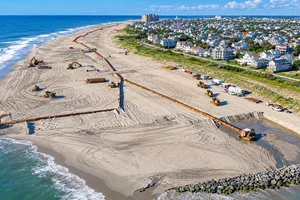
Ocean City’s northern shoreline is undergoing one of its most significant coastal infrastructure initiatives in recent years. The United States Army Corps of Engineers, in partnership with Great Lakes Dredge & Dock Company, has officially mobilized a $19.5 million beach renourishment project spanning from Seaspray Beach down to 12th Street. This massive public works effort involves pumping 1.6 million cubic yards of dredged sand onto eroded beaches to restore shoreline width and reinforce the island’s primary line of coastal defense.
For beachfront residents, seasonal visitors, and prospective home buyers, understanding the scope and timeline of this dredging operation is essential. As work progresses on a continuous 24-hour daily schedule near the Fifth Street jetty, temporary closures and heavy machinery are active along key beach access points. Here is a comprehensive look at how the project operates, what areas are affected, and why this shoreline investment matters for Ocean City real estate.
Scope and Operations Along Ocean City’s North End
The current nourishment cycle marks the 11th major beach replenishment along Ocean City’s northern shoreline under a long-standing 50-year coastal protection partnership with the federal government initiated in the early 1990s. Heavy equipment and offshore dredging vessels, including the hopper dredger Illinois staged near Great Egg Harbor Inlet, are actively pumping sand onto the beach through sublines landing near St. Charles Place and adjacent street ends.
To ensure public safety while heavy earth-moving equipment operates, contractor crews isolate approximately 1,000 feet of beachfront-roughly two city blocks-surrounding the active discharge pipe at any given moment. Work is executed in distinct phases:
Pumping initially moves southward from the Fifth Street jetty toward the 12th Street terminus.
Once the southern stretch is completed, operations will reverse direction and work northward toward Great Egg Harbor Inlet.
Temporary closures affect specific beach access points, including Fourth Street, Brighton Place, and Fifth Street, as sand is deposited and graded.
Rebuilt sections extending from First Street through Park Place have already reopened to the public with guarded swimming zones managed by the Ocean City Beach Patrol.
To maintain pedestrian mobility across overland pipelines, contractors construct elevated sand ramps over the pipes at open street access points. Municipal teams have also reopened the Morningside Road beach ramp while finalizing adjacent Americans with Disabilities Act (ADA) compliant access paths.
Protecting Property Values and Island Infrastructure
Coastal engineering projects of this magnitude serve a direct economic and protective purpose. Beyond expanding recreational beach space during the summer season, an elevated sand berm absorbs wave energy during severe ocean storms, shielding beachfront structures, public boardwalks, and municipal utilities from ocean surge and flood damage.
"On the barrier islands, location drives everything. The right street can make all the difference," said Mike Sutley, Team Leader here at Lexy Realty Group.
Maintaining wider, well-engineered beaches helps stabilize surrounding residential real estate values across Ocean City’s northern neighborhoods, from the Gardens district down through the upper boardwalk avenues. Properties situated near protected shorelines routinely command premium long-term value due to reduced storm vulnerability and restored dune buffers.
Navigating Summer Closures and Beach Access
While 24-hour dredging operations create localized detours, municipal officials and project managers have structured the project to minimize community disruption. As crews complete sand placement along specific two-block sections, closed beach areas are graded, inspected, and quickly reopened for public use.
Key operational guidelines for residents and visitors include:
Check daily municipal updates for active pipe locations and temporary beach block closures.
Utilize established sand crossovers at Morningside Road and open street ends to safely navigate overland pipelines.
Observe all posted Ocean City Beach Patrol safety flags and perimeter fencing surrounding heavy equipment.
Utilize lifeguarded swimming zones between First Street and Park Place where nourishment work is complete.
Key Takeaways for Homeowners and Buyers
The $19.5 million investment underscores the ongoing federal, state, and municipal commitment to maintaining Ocean City’s coastal infrastructure. With the federal government covering approximately 65% of coastal protection funding and local bonds covering the remainder, Ocean City continues to benefit from institutionalized shoreline resilience.
For property owners along Atlantic Avenue, Ocean Avenue, and adjacent north-end streets, wide beaches represent both an essential protective barrier and a core driver of seasonal rental demand.
Frequently Asked Questions
How long will construction work remain in front of a specific beach block?
Sand pumping typically moves at a rate of one to two city blocks every few days. A specific 1,000-foot work area is generally closed for approximately 48 to 72 hours before being graded and reopened to the public.
Are guarded swimming beaches available near the work zones?
Yes. The Ocean City Beach Patrol adjusts guarded swimming locations as work progresses. Rebuilt beaches from First Street to Park Place are open for swimming, while active pipeline discharge zones remain strictly closed to the public.
Will beach replenishment affect parking along Beach Road or Ocean Avenue?
Minor parking restrictions exist along Beach Road near the Morningside Road staging area to accommodate construction vehicles and equipment delivery. Staging areas are clearly marked with municipal parking advisories.
Curious how shoreline protection and beach replenishment affect property values in Ocean City's north end? I'd be happy to help. You can call me directly, send a quick message, or visit my contact page to get started.
Sources: Ocean City Administration; U.S. Army Corps of Engineers; OCNJ.us