
Ocean City Beach Replenishment Project Moves Into Construction
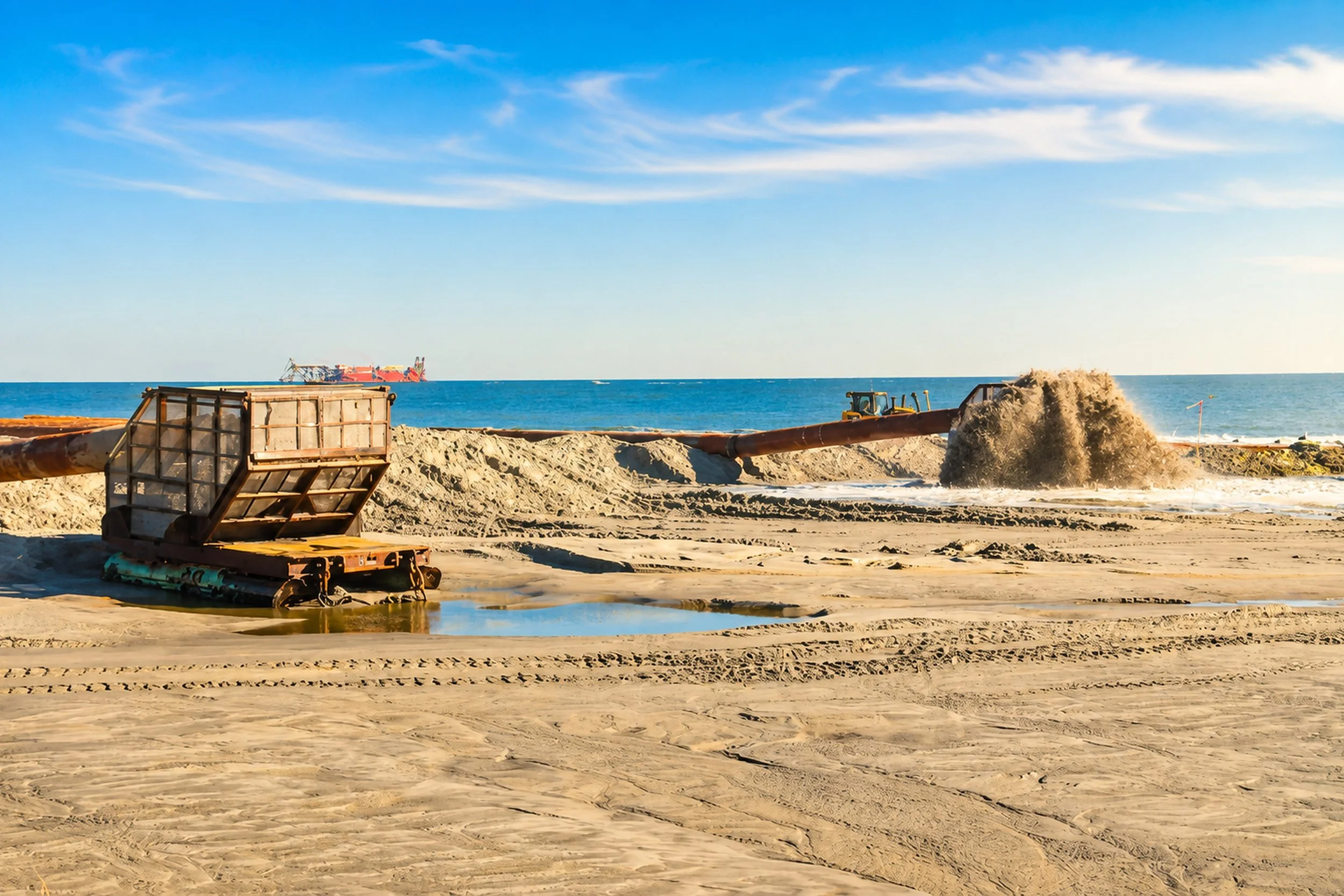
Major beach work is underway in northern Ocean City
Ocean City’s latest beach replenishment project is moving forward with a $19.5 million federal contract awarded by the U.S. Army Corps of Engineers to Great Lakes Dredge & Dock Company.
The project calls for approximately 1.6 million cubic yards of sand to be placed along the northern Ocean City shoreline between Seaspray Beach and 12th Street.
By August 9, 2026, crews had begun assembling subsea pipeline and staging heavy equipment along portions of the beachfront between Moorlyn Terrace and Fourth Street.
For residents and visitors, that means beach access will continue throughout most of Ocean City, but individual work areas will temporarily close as construction progresses.
What the Ocean City beach replenishment includes
Beach replenishment is designed to rebuild portions of the shoreline that have lost sand through normal erosion and storm activity.
For this Ocean City project, contractors will use offshore dredging equipment to collect sediment and pump it through submerged pipelines onto designated sections of the beach.
The approximately 1.6 million cubic yards of sand will be used to:
Widen portions of the existing beach.
Rebuild eroded dune systems.
Restore storm-protection capacity along the oceanfront.
Reinforce the beach profile before the fall weather season.
The work represents one of Ocean City’s larger infrastructure projects during the 2026 season.
Where crews are currently working
The overall replenishment zone stretches from Seaspray Beach south toward 12th Street.
Equipment staging reported in early August was concentrated between Moorlyn Terrace and Fourth Street, where contractors were assembling pipeline and preparing beachfront work areas.
The project will not require Ocean City’s entire northern beach to close at once.
Instead, construction is expected to move through individual sections. Active construction zones will temporarily close to the public while adjacent beaches remain available.
That rolling approach helps contractors continue work without eliminating access across the entire project area.
Why beach replenishment is done
Ocean City’s beaches serve two different purposes.
They are the foundation of the city’s summer tourism economy, but they also function as part of the island’s storm-protection system.
A wider beach provides additional distance between ocean waves and developed portions of the island. Dunes provide another barrier that can reduce the force of storm-driven water before it reaches streets, homes, businesses, and municipal infrastructure.
Replenishment does not eliminate flooding or storm risk, but maintaining beach and dune systems is an important component of shoreline protection along barrier islands such as Ocean City.
Who is paying for the work?
The research packet identifies the project as a $19.5 million federal contract administered through the U.S. Army Corps of Engineers.
Funding is structured through a combination of federal and state resilience funding along with local municipal cost sharing.
Great Lakes Dredge & Dock Company is the contractor responsible for performing the work.
That structure is common for major beach nourishment projects because shoreline protection often involves federal engineering programs working in coordination with state and local governments.
What beachgoers should expect
Anyone heading to Ocean City’s northern beaches while construction is active should expect conditions to change as crews advance from one section to another.
A beach that is open one day may become part of an active construction zone as the pipeline and heavy equipment move.
The key points for visitors are:
Most surrounding beaches are expected to remain accessible.
Active work zones will temporarily close.
Heavy construction equipment and piping will be visible.
Work will progress through sections rather than closing the entire northern shoreline.
Following Ocean City’s municipal updates is the best way to determine where crews are operating on a particular day.
What happens next?
Contractors will continue moving sand into designated replenishment areas and rebuilding the beach and dune profile through the project zone.
The engineering objective is to restore protection along the northern Ocean City shoreline ahead of the fall weather season.
For homeowners, year-round residents, and second homeowners, the most noticeable short-term effect will be temporary beach closures near active construction. The longer-term purpose is maintaining the beach and dune system that protects the developed island behind it.
Sources: City of Ocean City; U.S. Army Corps of Engineers


