Margate Raises Alarm Over Beach Replenishment Silting Back Bays
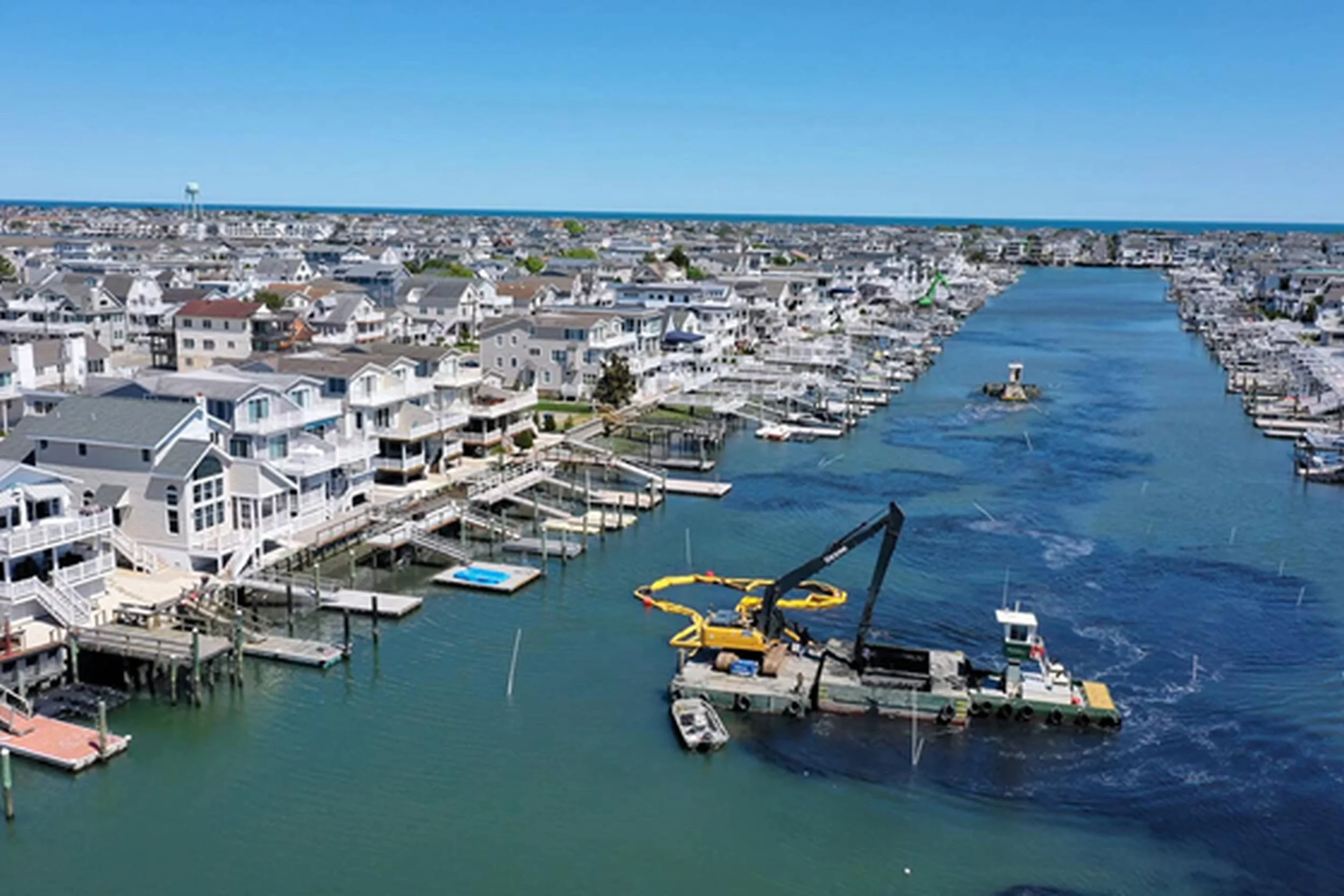
Margate officials are pushing back against New Jersey’s long-running beach replenishment program, arguing that state-mandated oceanfront projects are directly contributing to dangerous sediment buildup in the city’s back-bay lagoons. At a December 17 public meeting, city leaders linked accelerated shoaling in residential canals to offshore beach fill efforts that pump massive volumes of sand onto Absecon Island’s shoreline.
The concern is not theoretical. According to Margate’s solicitor, the movement of sand from the oceanfront around the island and into calmer bay waters has forced the city to dredge more frequently than in prior years. Residents along back-bay streets are already seeing the effects, including reduced navigability for boats and growing maintenance costs that fall squarely on local taxpayers.
What’s Causing the Sediment Buildup?
The beach replenishment work in question is part of a long-term coastal storm management plan overseen by the U.S. Army Corps of Engineers. Initiated during the Christie administration, the program involves repeated beach fills designed to widen beaches and protect barrier islands from erosion and storm surge.
Margate officials argue that while the oceanfront benefits are clear, the downstream impacts are not being addressed. Fine sediments from replenishment sites are carried by currents around Absecon Island and settle in the city’s lagoon system, particularly in low-flow areas.
At the December meeting, city representatives specifically cited shoaling in canals near Amherst and Jerome Avenues, where sediment has accumulated at an unusually fast pace. These areas require dredging simply to maintain safe access for boats and watercraft.
Dredging Costs and an “Unfunded Mandate”
City leaders described the situation as an unfunded mandate. While state and federal agencies authorize and fund beach projects, Margate is left to absorb the cost of dredging its back bays.
The city has secured permits and identified disposal sites for dredged material, allowing some work to move forward. However, officials noted that the preferred disposal option on Shelter Island has not yet been approved, forcing the city to rely on more expensive alternatives in the meantime.
Loss of navigable waterways affects more than recreation. Officials warned that prolonged silting threatens property usability for bayfront homeowners, particularly those who rely on docks, boat lifts, and water access as part of daily life.
Local Officials Call for Shared Responsibility
Margate leaders are now urging state and federal agencies to recognize dredging as an extension of the same coastal protection system that includes beach replenishment. Their argument is simple: if one project creates measurable impacts elsewhere, mitigation should be part of the same funding framework.
During the meeting, city officials emphasized that safe boating channels are a core part of Margate’s coastal infrastructure, not a luxury. They also stressed that repeated dredging cycles place increasing strain on municipal budgets, particularly for a small island community.
Why It Matters for Property Owners
Bayfront property owners are watching this issue closely. Restricted water access can affect how homes are used, rented, and maintained, especially during peak boating seasons. While no changes to property regulations have been announced, the situation highlights how large-scale coastal projects can create localized consequences.
“On the barrier islands, location drives everything. The right street can make all the difference,” said Mike Sutley, Team Leader at Lexy Realty Group. “When access to the bay is compromised, it’s something owners pay attention to right away.”
What Happens Next?
Margate plans to continue pressing for state and federal assistance while moving forward with permitted dredging where possible. Officials indicated that discussions with higher-level agencies are ongoing, though no funding commitments have been announced.
For now, residents can expect continued monitoring of sediment levels and phased dredging as logistics allow.
Micro-FAQ
Is the beach replenishment program stopping?
No. Officials are not calling for beach projects to end, but for mitigation of back-bay impacts.
Are homeowners responsible for dredging costs?
Dredging is handled by the city, but funded through municipal resources unless outside aid is secured.
Which areas are most affected?
Canals near Amherst and Jerome Avenues were specifically cited for rapid shoaling.
Sources: Margate City; Downbeach Buzz