The Nuances of the Jersey Shore Housing Market: Scarcity, Sentimental Value, and Zoning Shifts

The sweeping stretch of barrier islands running from Brigantine down to Cape May represents one of the most geographically constrained and emotionally charged real estate environments in the Northeast. In this highly specialized market, standard inland economic formulas rarely apply. Instead, a complex mix of finite land, deep-rooted family traditions, and evolving municipal regulations dictates property values and investment trajectories.
As the coastal market moves through 2026, conditions are transitioning from the frantic, pressure-cooked timelines of recent years into a more calculated, normalized pace. For buyers, sellers, and secondary investors, navigating this climate requires looking past broad headlines and focusing entirely on hyper-local structural signals.
The Physical Constraints of a Geography-Defined Market
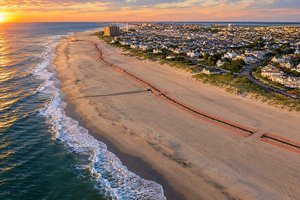
The foundational driver of the Jersey Shore real estate market is its absolute lack of expandable land. Surrounded by protected coastal wetlands and the Atlantic Ocean, these barrier islands feature a fixed inventory that cannot grow. This permanent scarcity underpins long-term pricing pressure and fuels the continuous demand for teardowns and custom new construction.
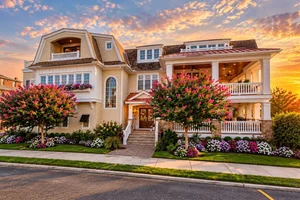
While demand remains highly resilient across the region, each beach town maintains its own distinct architectural identity and entry-level price thresholds:
Brigantine: Entry-level single-family homes start near $600,000, heavily drawing buyers from New York and North Jersey due to lower relative price points and direct accessibility.
Ocean City: The entry point for single-family homes holds steady near $900,000, sustained by a highly loyal, family-centric demographic.
Avalon & Stone Harbor: Premium entry-level price thresholds sit between $1.1 million and $1.2 million.
While these core segments remain active, the ultra-luxury tier—properties commanding $25 million or more—has experienced a noticeable deceleration, with high-net-worth buyers taking significantly longer to finalize commitments.
Sentiment Over Analytics: Evolving Buyer Demographics
The profile of the typical coastal property buyer has undergone a structural shift. The wave of remote workers who relocated to the shore full-time during the pandemic has largely receded, transitioning these properties back into seasonal second homes or cash-flowing investment assets as corporate return-to-office mandates intensified. Today’s dominant buyer segment consists of the baby boomer generation, who are actively deploying capital accumulated in the equity markets into lifestyle-driven real estate.
What sets the Jersey Shore apart from purely analytical investment markets is its powerful sentimental dimension. Generation after generation, families who vacationed in towns like Ocean City or Wildwood return to those exact municipalities as buyers. This emotional equity creates a baseline of demand that standard market statistics fail to capture.
Real Estate Insight: A Measured Market Stabilization
The current market is best characterized as normalized rather than stalled. The elimination of compressed bidding windows allows buyers the breathing room to view multiple homes, execute thorough due diligence, and make highly deliberate choices. However, a gap remains between buyer actions and seller expectations. Many sellers remain anchored to the historical peaks of the pandemic era, resulting in overpriced listings sitting on the market until they align with current conditions.
“Even when the market shifts, the best spots in town still get attention,” said Mike Sutley, Team Leader at Lexy Realty Group. "Waterfront homes have a way of holding their value here — the view and access just don’t go out of style."
This premium is particularly visible in the growing preference for bayfront and lagoon-facing properties over traditional beachfront lots. While beachfront homes offer unobstructed scenery, bayfront properties provide direct access for water-based recreation, including boats, jet skis, slip configurations, and pools—a combination that attracts a broader pool of active lifestyle buyers and drives consistent resale velocity.
Curious what your shore home might be worth in today’s normalized market, or looking to time an investment? I’d be happy to guide you through the process. You can call me directly, send a quick message, or visit my contact page to get started.
Escalating Zoning Pushback and Regulatory Traps
As developers look to maximize the physical footprint of older coastal lots—specifically targeting structures built in the 1980s or earlier—municipalities are actively pushing back. Towns like Brigantine are implementing restrictive zoning modifications to resist dense, maximum-envelope builds, choosing instead to preserve smaller footprints and traditional community aesthetics. For developers, this means profit margins depend entirely on the initial land acquisition cost, as subsequent construction elements represent fixed expenditures.
Furthermore, out-of-town investors frequently underestimate the regulatory complexities unique to coastal barrier islands:
FEMA’s 50% Rule: If a substantial renovation on a property located in a designated flood zone exceeds 50% of the structure's assessed value, the municipality mandates that the entire home be elevated to current flood standards—a capital-intensive process that can instantly break a project's budget.
Environmental & Structural Degradation: Older coastal structures require hyper-focused inspections to identify hidden liabilities, such as devastating pine beetle damage to underlying foundation pilings.
Counterintuitively, despite high initial acquisition costs, property taxes in these coastal enclaves remain remarkably low compared to mainland New Jersey standards. This lower tax burden significantly alters the long-term carrying cost calculus, frequently offsetting a portion of the monthly mortgage allocation for strategic investors.
Looking Ahead: Staging for Future Development
Succeeding in the modern Jersey Shore market requires a mastery of hyper-local variables—from shifting municipal zoning laws and structural water access parameters to the pedestrian walkability thresholds required to sustain profitable summer rental yields.
Reflecting these exact market indicators, Lexy Realty Group is leveraging its background in construction estimating and local market analysis to expand directly into residential development operations. The firm is launching its initial development phase in Ocean City, with structured expansion plans targeting subsequent custom builds across Margate, Longport, and Ventnor. Regardless of broader mainland real estate trends, the shore remains insulated by its own unique, insular economic drivers.
Frequently Asked Investment Questions
What is the primary operational difference between beach and bay properties?
Beachfront properties command premium pricing for direct ocean views but restrict immediate water sports. Bayfront and lagoon-facing parcels allow for private boat slips, jet ski docks, and standard pool installations, appealing directly to active-lifestyle buyers.
How does proximity to town affect rental investment returns?
As seasonal rental demand experiences a gradual stabilization, proximity to the oceanfront or walkable downtown hubs has become a necessity. Properties requiring extended walks to core amenities cannot command the premium rental rates required to offset modern carrying costs.
Why are property taxes lower in shore communities compared to the rest of NJ?
The massive concentration of high-value real estate assets and a smaller year-round public infrastructure burden allow coastal shore towns to maintain significantly lower property tax rates relative to inland municipalities.
Sources: Key Crew Corporate Feature Series; Lexy Realty Group Research Archive
Credit: This article is based on original reporting and insights published by Key Crew (keycrew.co).